
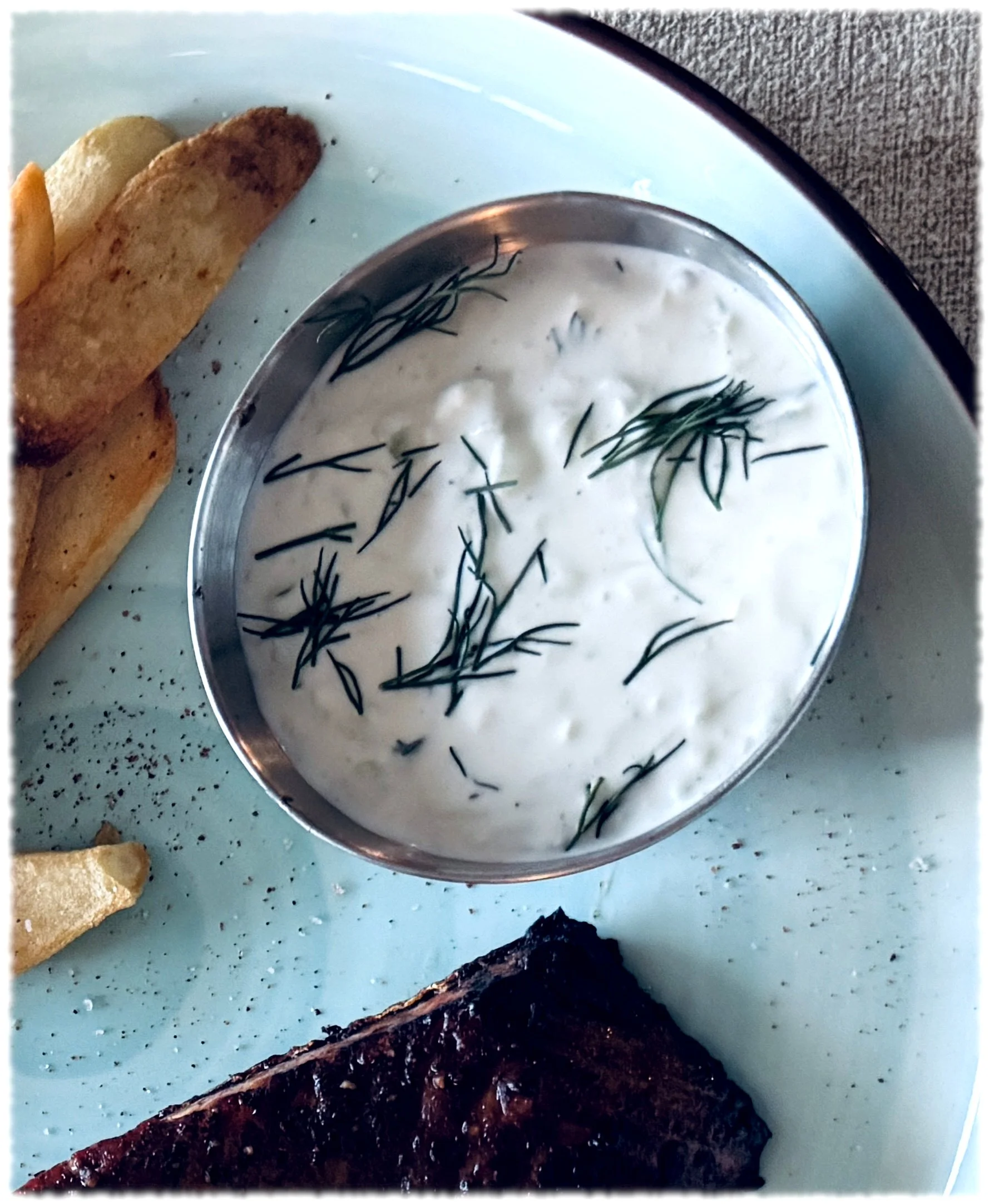
Tzatziki sauce
Make it stand out
Whatever it is, the way you tell your story online can make all the difference.
A few disclaimers on this one:
I am Greek, however I was sadly not raised with any Greek family members passing down authentic recipes.
I have been to Greece and sampled amazing Tzatziki at many restaurants of all different price points.
This recipe does not use Greek yogurt *gasp*. I know, but there’s a reason behind this that I’ll get into later.
I was inspired to finally learn how to make this dip after my recent trip to Greece, where the tzatziki at the majority of restaurants was astoundingly better than anything I’ve had here in the U.S. I was determined to try to duplicate it as best I could so I can enjoy it at home anytime.
The best thing about tzatziki, other than the taste of course, is how healthy it is! And you can use it in place of so many other dips that are not that healthy for you (ranch dressing anyone?)
Use tzatziki as a sauce for fries (regular, steak fries, sweet potato fries, etc.), onion rings, chicken nuggets, or really any type of meat - pork, beef, lamb, etc. Makes a great dip for veggies, or a nice way to add some Mediterranean flavor to a sandwich.
So, now why don’t I use Greek yogurt in my tzatziki sauce you ask? Real tzatziki actually uses strained sheep’s milk yogurt which can be very difficult to find in the U.S. Standard Greek yogurts in the U.S. market are made with cow’s milk and are either super thick and tart (think Fage), or runny and somewhat bland in flavor (like Chobani). The perfect compromise I’ve found is Icelandic yogurt, specifically the Siggi’s brand. It’s protein rich and decently thick like a good Greek yogurt should be and has wonderful flavor but not the excessive bite of Fage.
Important note: Never, ever buy The Greek Gods “Greek” yogurt for any recipe. It is not actually strained Greek yogurt at all, but regular yogurt that’s just thickened with additives. It’s significantly lower in protein and less healthy as a result.
Ingredients:
1 cup fresh grated and drained cucumber - English cucumber preferred, but regular cucumber works if lightly peeled first.
3-6 cloves of garlic
2-3 TBSP lemon juice
1-2 TBSP extra virgin olive oil
Chopped fresh dill to taste
Salt
Black Pepper
Instructions:
Use a large holed grater to grate cucumber into a bowl.
Once you have about a cup worth, use paper towels, clean dishtowels or cheesecloth to press and drain out the excess water from the shredded cucumber.
Lightly salt the shredded cucumber.
Use a garlic press or fine Microplane grater to add garlic to the mixture. Very finely chopping the garlic can work too.
Add some olive oil and start to combine the ingredients.
Add in the yogurt.
Add lemon juice, salt, pepper and chopped fresh dill to taste.
Refrigerate in an airtight container.
The flavors of the tzatziki will meld and intensify a bit a few hours after making. It should stay fresh for at least 4-5 days if properly stored. Use your nose and eyes to judge!
This sauce will be decently chunky, which I love as it makes it easier to pile it heavy onto things like fries. You could hit it with a hand blender though if the texture is not your thing.
Stay tuned for my next Greek recipe in development - Fiery feta dip!
This page contains affiliate links. See disclosure policy.
